
In recent years, the global business landscape has witnessed a shift from focusing purely on profit to more human-centered, responsible, and sustainable practices. Across industries, organizations are recognizing that a healthy and engaged workforce is a key driver of productivity, cost efficiency, and company culture. As a result, employee wellness has evolved from a supplementary HR initiative into a strategic priority, firmly embedded within Environmental, Social, and Governance (ESG) frameworks.
Nowhere is this convergence more complex and necessary than in the Gulf Cooperation Council (GCC) countries. The region’s distinctive socio-cultural fabric, diverse labor market, and ambitious national transformation agendas necessitate an approach that integrates wellness, ESG, and cultural sensitivity cohesively.
Employee Wellness as a Core ESG Priority
The social pillar of ESG encompasses labor practices, diversity and inclusion, employee rights, and health and safety. Increasingly, employee wellbeing is recognized as a strategic driver of organizational sustainability and resilience. Rising levels of stress, burnout, and mental health challenges across the global workforce are pushing organizations to embed wellness deeper into their corporate DNA; not as a perk, but as a business imperative.
Many employees today are navigating rising levels of stress, burnout, and emotional strain, and the cost to both individuals and organizations is substantial. The World Health Organization estimates that depression and anxiety lead to the loss of 12 billion working days each year, costing the global economy $1 trillion in productivity.
But the upside is equally compelling: companies that invest in employee wellbeing see real results. Strong wellness programs have been linked to a 20% boost in productivity and a 30% drop in absenteeism. Perhaps most telling, employees who feel genuinely cared for by their employer are significantly more loyal and less likely to look for another job.
In the GCC, this business case for wellness aligns with top-down national priorities. Countries like Saudi Arabia, the UAE, and Qatar have positioned human capital development as a cornerstone of their national visions. But implementing wellness in this region requires more than broad global strategies, it must be adapted to fragmented labor markets defined by nationality, religion, and socio-economic background.
Beyond compliance, wellness initiatives directly impact workforce engagement, talent retention, employer reputation, and operational costs. ESG investors and regulators are increasingly demanding measurable data on occupational health, mental health, and safety, placing employee wellbeing squarely within the scope of material ESG reporting.
For organizations in the GCC, equitably addressing wellbeing is a reflection of their values and readiness for sustainable growth. But effectively translating wellness ambitions into action requires a deep understanding of the region’s unique cultural and demographic landscape.
Wellness in the GCC: A Culturally Diverse and Sensitive Environment
GCC workplaces are among the most demographically diverse globally. Expatriates constitute between 40% and 90% of national populations, depending on the country. This creates highly multicultural, multi-faith, and multilingual workforces. At the same time, GCC societies maintain strong religious, cultural, and traditional values that shape workplace norms.
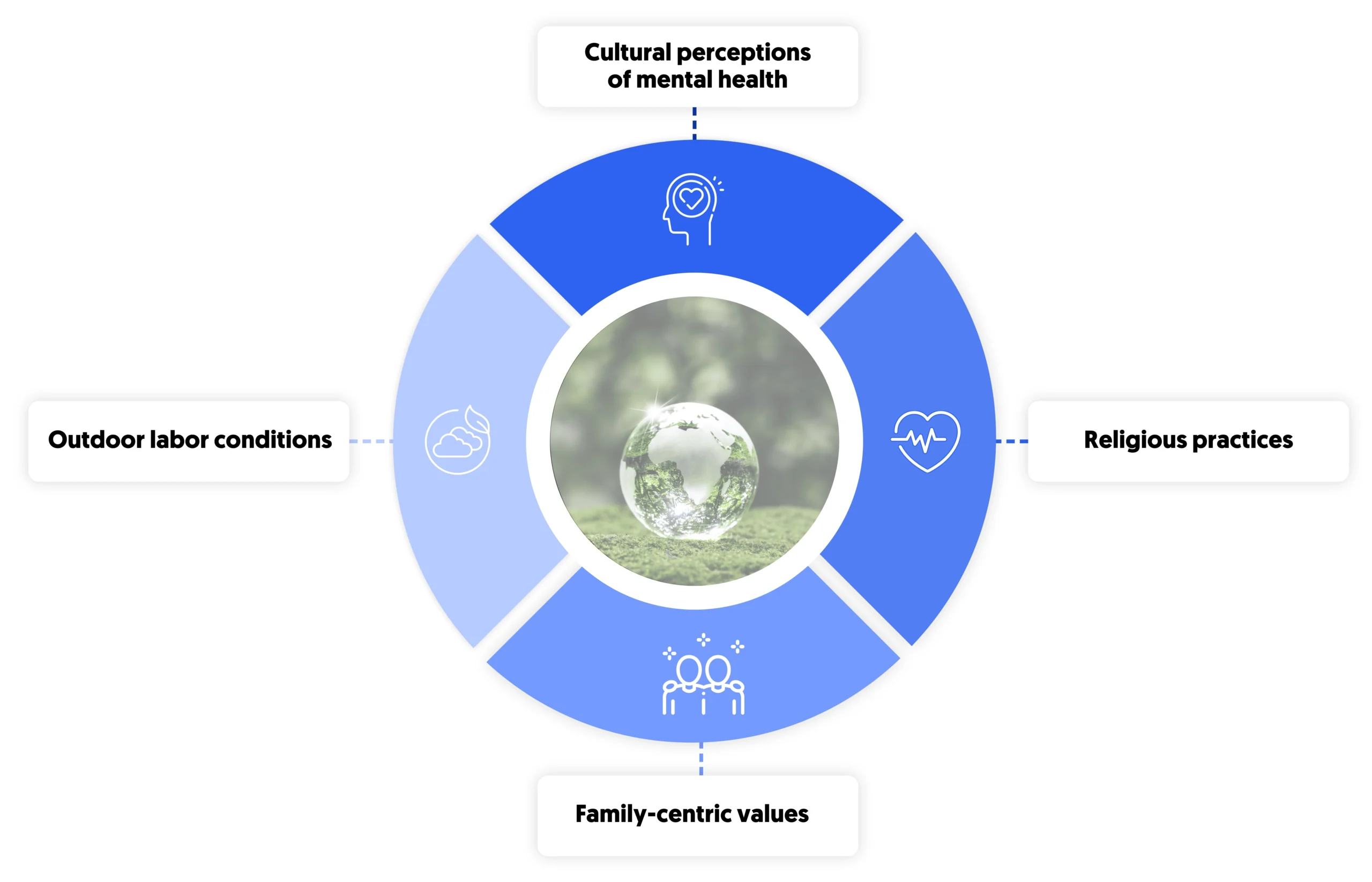
Wellness initiatives in this context must account for:
Cultural Perceptions of Mental Health:
While mental health awareness is growing across the GCC, perceptions vary widely among cultural groups. In some communities, mental health is viewed as a private matter or even a weakness, especially among expatriate workers. What one culture sees as burnout, another may interpret as laziness or lack of discipline.
As a result, employees may avoid seeking support out of fear of judgment or job insecurity. To be effective, wellness programs must reflect these nuances by framing support around stress, energy, or resilience, and offering private, stigma-free ways to access help. Culturally sensitive language and delivery are essential to building trust and encouraging engagement.
Religious Practices:
In a region where faith plays an integral role in daily life, wellness strategies must respect and align with religious practices. For example, scheduling wellbeing sessions around prayer times or providing healthy Iftar meals during Ramadan shows thoughtful inclusion. Even small details like offering wellness resources that align with religious values or being mindful of modesty in fitness spaces, can make a difference in participation.
Outdoor Labor Conditions:
Many frontline workers in the GCC, particularly in construction and oil and gas, face harsh climate conditions that directly impact their physical and mental wellbeing. During peak summer months, heat stress is a daily reality.
Effective wellness in this context means going beyond policy and ensuring shaded rest areas, hydration protocols, and health monitoring are not just available, but enforced. When companies prioritize humane working conditions for outdoor staff, they demonstrate that wellness is a right for all. But for these efforts to be effective, they must be supported by systems that address deeper structural barriers like language accessibility, digital literacy, and culturally relevant communication; especially for migrant workers who often fall through the cracks of standard wellness programs.
Family-Centric Values:
In many GCC cultures, personal wellbeing is closely tied to family stability. Employees often carry emotional and financial responsibilities for extended family members, whether locally or abroad. This makes access to family-inclusive healthcare, parental support, and dependent benefits lifelines.
A wellness program that acknowledges these dynamics like hosting family wellness days, offering remote access to resources, or extending support to spouses, signals that the organization sees the employee not just as a worker, but as part of a larger social unit.
Embedding Wellness into the Employee Experience (EX)
As employee wellbeing becomes an essential pillar of ESG strategy, organizations are moving beyond surface-level perks toward programs that reflect the realities of daily work life. In the GCC, where cultural identity, family ties, and social norms deeply influence how people experience work, embedding wellness into the EX requires empathy, relevance, and adaptability.
To create meaningful impact, wellbeing must be woven into the daily rhythm of work, shaping how employees feel, perform, and grow within the organization.
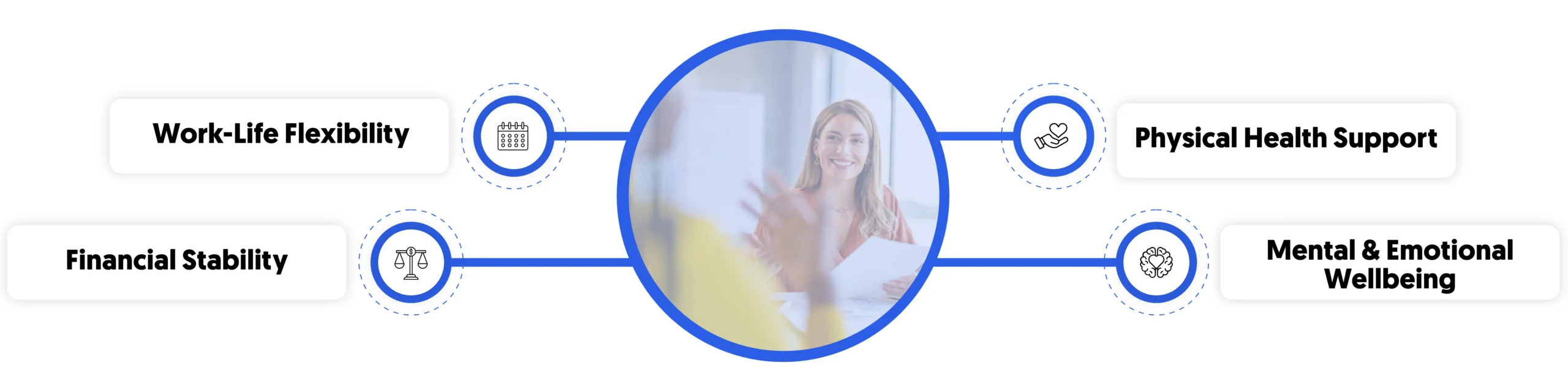
Key areas include:
- Physical Health Support: Environments that support movement, healthy habits, and preventative care contribute to sharper focus and sustainable performance. Offering ergonomic workspaces, wellness access, and health check-ups signals a commitment to proactive care.
- Mental & Emotional Wellbeing: Stress and burnout erode performance and engagement. Programs that promote mental health through therapy access, mindfulness, and psychological safety cultivate stronger morale and deeper engagement.
- Work-Life Flexibility: When employees have control over their time, they work with more focus and commitment. Whether through hybrid models, adaptable schedules, or supportive policies, flexibility helps people show up at their best; both professionally and personally.
- Financial Stability: Financial wellbeing affects focus and emotional resilience. Offering fair compensation, education on money management, and reliable benefits allows employees to feel supported beyond the paycheck.
While these pillars of employee experience form the foundation of effective wellness programs, their success in the GCC depends on how well they are adapted to local cultural dynamics.
Culturally-Sensitive Wellness Program Design
Designing wellness programs without a cultural lens risks alienating employees or rendering initiatives ineffective. Organizations in the GCC can enhance ESG outcomes by embedding cultural intelligence into their wellness strategies:
Localized Wellbeing Assessments:
Move beyond generalized surveys to gather data that reflect the realities of a diverse workforce. Segment assessments by nationality, gender, job function, and work environment to capture a nuanced understanding of employee needs. This helps identify overlooked issues such as isolation among migrant workers or stress related to family separation, and tailor wellness initiatives accordingly.
Faith- and Tradition-Aligned Programs:
Respect for religious practices is essential in the GCC. Integrate wellness activities that consider prayer times, fasting during Ramadan, and other spiritual observances. This could include designated prayer rooms, guidance on healthy fasting practices, or adjusting wellness challenges to align with religious calendars. Such alignment shows respect for employees’ values and encourages greater engagement.
Inclusive Communication:
Wellness communication must speak to the full spectrum of the workforce. In many GCC organizations, wellness programs are introduced in formal Arabic or English, leaving behind large groups of employees who may feel more comfortable in Hindi, Urdu, Tagalog, or Bengali.
For example, an initiative promoting mental health support might go unnoticed by site workers simply because the posters weren’t translated into the languages they use daily. Inclusive communication means meeting people where they are through accessible language, relatable visuals, and messages that feel personal. When employees see themselves reflected in the message, they’re more likely to engage with the support offered.
Family-Focused Benefits:
In practice, supporting family wellbeing means moving beyond traditional employee benefits. Organizations can offer services like dependent healthcare, access to remote wellness platforms for family members, or tailored support for employees managing responsibilities across borders. These efforts are especially impactful in the GCC, where acknowledging the employee as part of a broader social unit reinforces trust and long-term loyalty.
This approach ensures that wellness initiatives are not tokenistic add-ons, but central to ESG strategy and organizational culture.

Technology That Listens: Powering Scalable, Employee Wellness
Effectively scaling wellness programs across diverse, dynamic organizations requires more than good intentions; it demands smart infrastructure. Today, technology plays a pivotal role in enabling organizations to deliver tailored, inclusive, and responsive wellness support at scale.
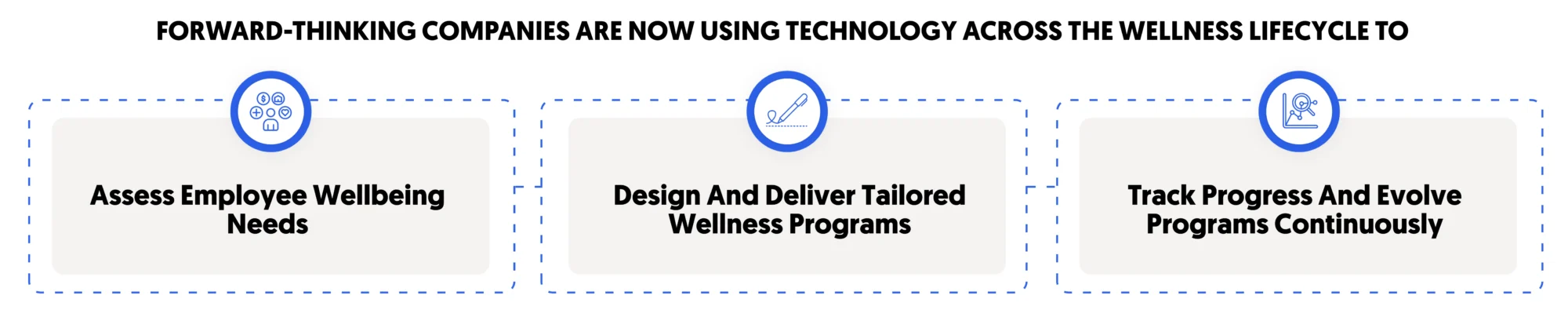
Here’s how leading companies are using technology across the employee wellness journey:
Understanding Workforce Needs in Real Time
Today’s most effective wellness strategies are powered by technology that listens. Tools such as pulse surveys, sentiment tracking, and behavioral analytics help organizations monitor employee wellbeing continuously. In GCC workplaces, these insights surface early signs of stress, disengagement, or unmet needs, allowing leaders to intervene thoughtfully before challenges escalate.
Designing Culturally Relevant Wellness Solutions
Once insights are captured, technology becomes the engine for personalized care. With real-time insights, organizations can shape wellness initiatives that reflect employees’ cultural and personal contexts. AI-enabled platforms now allow for the delivery of customized resources, whether that’s mental health support in preferred languages, guidance tailored to job roles, or flexible benefits based on life stage or family needs.
Measuring Impact and Improving Responsiveness
Ongoing measurement is essential for long-term success. Digital dashboards now track participation, utilization of support services, and changes in employee sentiment, providing the data leaders need to refine and evolve their wellness strategy. This ensures wellness programs remain relevant, evidence-based, and aligned with broader ESG goals.
Beyond the Vision: Why Wellness Falls Short Without Structural Change
But despite stronger organizational intent and the growing use of technology, structural barriers in the GCC still limit the reach and sustained impact of wellness initiatives.
Language & Access
In a region where expatriates make up the majority of the workforce, wellness programs that lack multilingual support risk excluding the very people they aim to serve. This is particularly true for frontline and outdoor laborers, many of whom have limited access to digital tools or wellness materials delivered in formal Arabic or English. Without targeted support, these workers remain disconnected from programs designed to protect their health.
To close this gap, the UAE’s Ministry of Human Resources and Emiratization (MOHRE) mandates that essential workplace communications and services be delivered in multiple languages, setting a regulatory foundation for more inclusive and accessible employee support.
Cultural Fit
Many wellness solutions are also built on behavioral assumptions that don’t translate in the GCC. Algorithms trained on Western norms often misread emotional cues, overlook culturally driven behaviors, and misjudge engagement.
For example, in cultures where direct emotional expression is uncommon, what appears as indifference may in fact reflect stress, burnout, or family pressures. Without cultural or clinical literacy, these signals go unnoticed, leading to low adoption and diminished credibility. To address this, initiatives like Saudi Arabia’s Quality of Life Program and the UAE’s National Wellbeing Strategy promote the development of wellness solutions rooted in local values.
Stigma & Privacy
Despite growing awareness, stigma remains a major barrier to mental health engagement across many GCC workplaces. In cultures where personal struggles are kept private and open-plan offices offer little discretion, employees are unlikely to seek support without strong guarantees of confidentiality. One employee’s journey from stigma to recovery can shift an entire company’s culture, but only if systems are in place to protect them.
In the UAE, the Federal Data Protection Law now provides a legal framework that safeguards sensitive employee information, including mental health records, reinforcing privacy as both a right and an enabler of trust.
Lack of Relevant Data
Generalized wellness metrics also fall short in a labor market as stratified as the GCC. Leaders need segmented, role-specific, and demographically contextualized data to make informed decisions. Without visibility into how different groups, by nationality, gender, or job type, experience wellbeing, companies risk misallocating resources and overlooking systemic gaps.
In response, GCC governments have been embedding wellness KPIs into national labor and HR platforms. For example, Saudi Arabia’s Qiwa system tracks employee experience metrics across distinct workforce segments, supporting more targeted policy and program design.

ESG Reporting and Governance: Tracking Wellness Impact
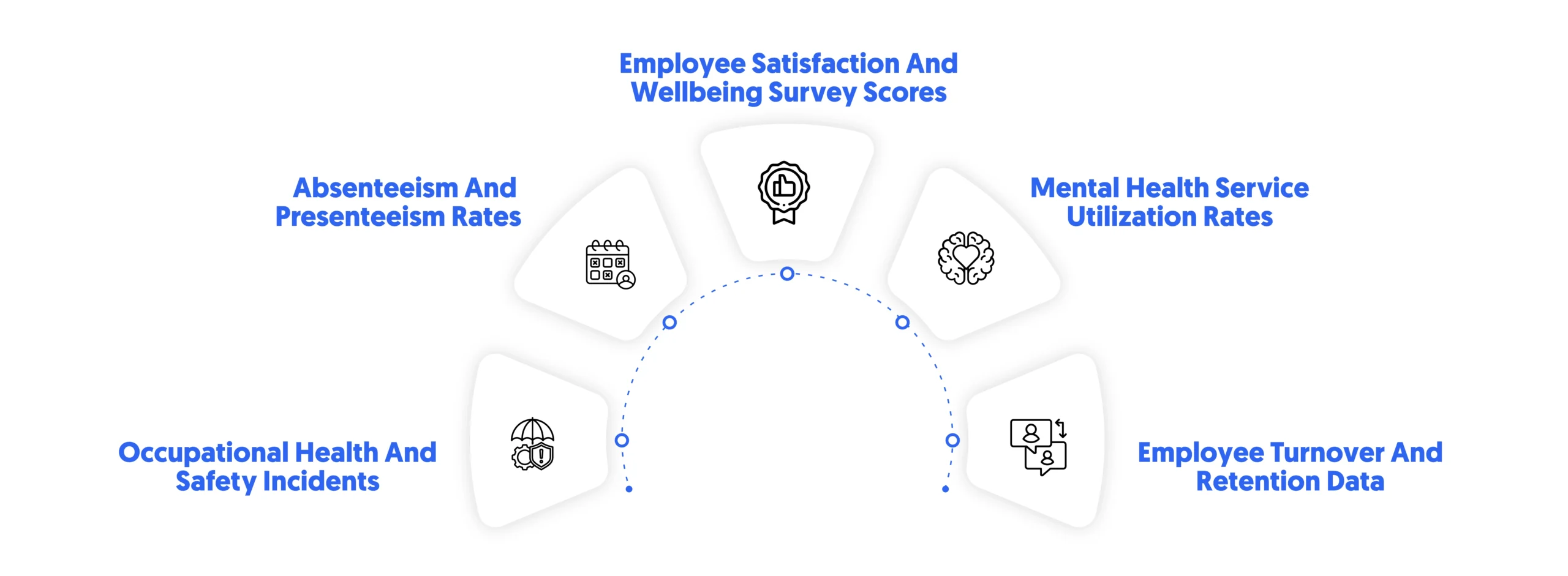
Addressing these challenges requires not just thoughtful design, but measurable progress. As ESG reporting expectations rise in the region, companies must demonstrate the effectiveness of wellness programs through measurable outcomes. This includes:
- Occupational health and safety incidents – Reflects how effectively an organization protects employees from physical harm and ensures regulatory compliance.
- Absenteeism and presenteeism rates – Reveal hidden productivity losses due to illness, stress, or disengagement, even when employees are physically present.
- Employee satisfaction and wellbeing survey scores – Capture how employees experience the workplace environment, including stress levels, engagement, and trust.
- Mental health service utilization rates – Indicate both awareness and perceived psychological safety in accessing emotional support tools.
- Employee turnover and retention data – Signal whether the workplace culture fosters long-term loyalty or drives attrition due to unmet needs.
Integrating these metrics into ESG reports signals to investors, regulators, and employees that the organization values its people and aligns with GCC national visions for human capital development.
Employee wellness, ESG priorities, and cultural sensitivity are not parallel concerns; they are interconnected drivers of sustainable growth in the GCC. Organizations that recognize this intersection are better positioned to align with national visions, attract diverse talent, and build workplaces that are both resilient and inclusive.
Wellness is a reflection of how an organization values its people. And in the GCC, where cultural identity, social norms, and labor market dynamics are distinct, wellness efforts must be designed with care, cultural intelligence, and genuine commitment.
As regulatory demands and societal expectations evolve, the companies that lead will be those that embed wellness into their core operations. Wellness, when done right, is a competitive advantage and a foundation for lasting, meaningful impact.